Pages

Friday, September 25, 2015

The First Law of Motion

My son and I were walking back from the library where he had just spent two straight hours playing his favorite video game (and was consequently in a mellow mood). 

As we marched on the pavement, we talked at first of this and that, chit-chat. Then it occurred to me this could be a good chance to strike up a conversation about something they'd be touching on at school soon.
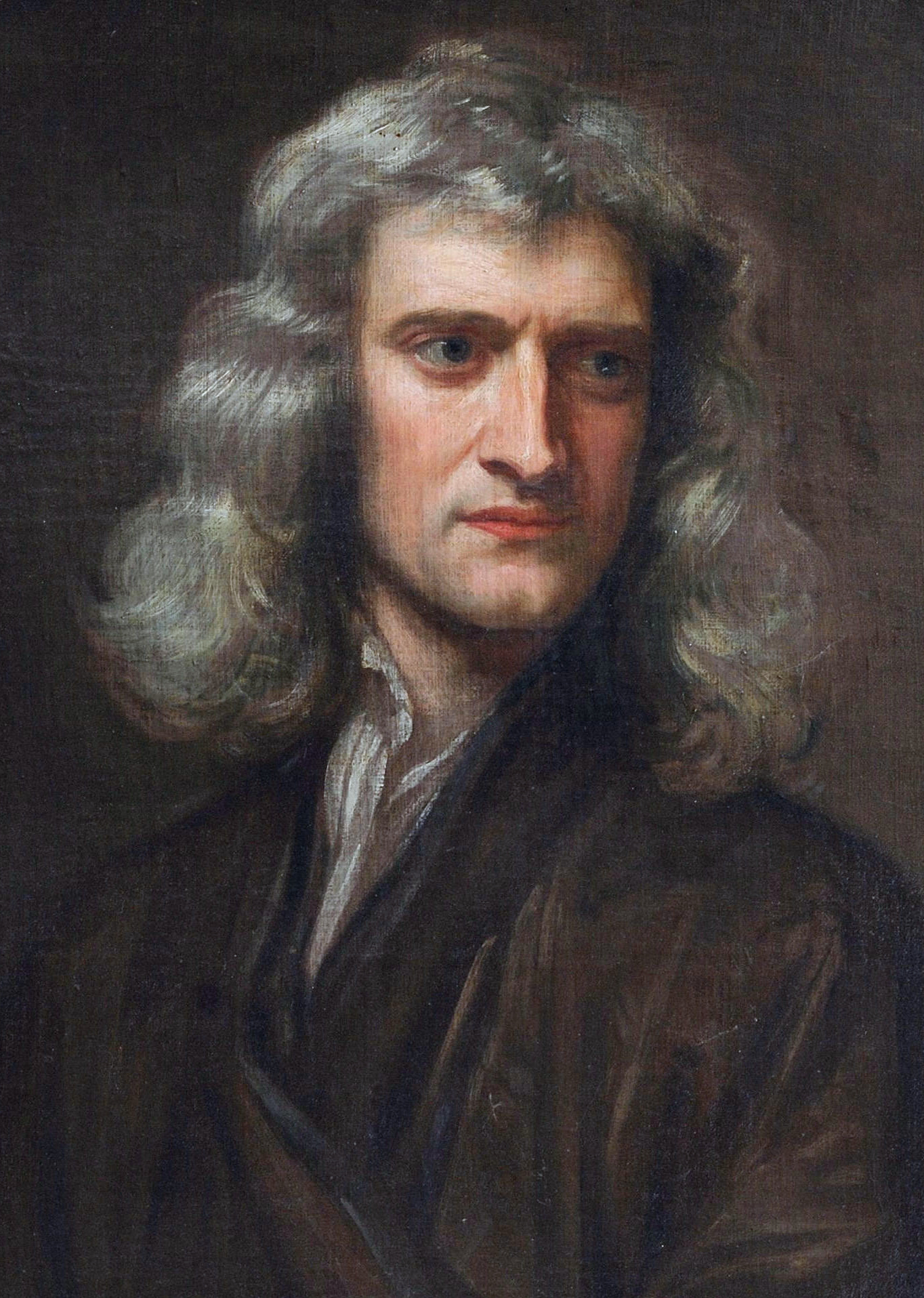
"This guy, Newton," I started. "So he has three laws of motion, right?" 

"Right," he said, a little cautiously, but not too perturbed. He is used to my habit of starting conversations like this rather abruptly.

"Do you happen to know what they are?" 

He seemed a little dubious, so I backed up and decided to go even slower.

"Ok, let's talk about just the first one. It basically says objects that are at rest don't move, and if they are moving at a constant speed, they stay that way unless something acts on them to change their motion."

He nodded, this seemed familiar. "Because of their momentum," he noted.

I had noticed his laces were untied and pointed it out to him. We stopped by a fence while he put up his shoes to fix them.


"Yes, momentum, or..." I got a little confused myself, watching him. He was in fact right, but I wasn't sure in the moment if momentum was the right word to use about this law, so I said, "well, I think Inertia is the word we want. We say the objects have inertia, inertia of rest or inertia of motion."

I went on: "Do you know the ancient Greeks had their own version of this law, and it was rather different?"

He looked up, interested. We have been watching a very entertaining history TV show these days and the Groovy Greeks, he knows, are always an interesting lot.

"They thought objects prefer to be always in motion unless something acts on them to stop them."

He chewed on this, as I went on to say,  "But we know this isn't true. If you did this experiment in zero gravity and in a vacuum, for example, an object could stay still with nothing touching or acting on it."

Digressing here a bit, he said, "Oh, you know, my science teacher once got to experience zero-gravity. She said it was not a pleasant experience. Your insides feel like they're not supported."

"Hmm...," I said, "very interesting. I hadn't thought of how it would feel." 

He ran off at this point ahead of me. I took it as a signal he had gotten bored of the discussion we were having about Newton, but he smiled and clarified he didn't want to miss the chance to catch the light, so he had run ahead to push the button on time. Indeed, the walk signal showed up right away and we could cross. 

Seeing that I still had his attention, I continued as we crossed the road, "So, to them, the Greeks, every object they saw preferred to move and would only stop if prevented from moving. In particular they noticed objects always want to fall down, that is to say, move downwards, unless they were held up."

I gestured with my hands to illustrate this. We walked past some tall grasses, then a big box intended to collect clothing donations.

He thought about it a bit and remarked perceptively: "I see how what they were thinking makes a lot of sense. Imagine a rock at the very edge of a sheer cliff. It wouldn't even want to stay at the ground at the top of the cliff, it would rather fall even further down if it could. So the cliff is holding it in place."

"Right."

He nodded, chewing it further in his head.

I then asked, "Do you think the Greeks were wrong?"

He said "yes," right away.

I clarified a bit further: "I mean, if you think about the two different theories, they do agree on one point, that an object in motion could be stopped by a force acting on it. But they actually disagree about what would happen if an object was not moving and nothing was touching it or pulling/pushing at it. The Greek version says that is simply not possible, while Newton's law says it would stay still."

I continued, "the Greek version of this law applied to everything they encountered in their daily lives. We simply don't see such an object in our everyday experience. So for what we come across in our every day experience, both Newton's theory and the Greek theory are valid."

He responded, "I see. I kinda sympathize with them, they simply didn't know any better." 

"Exactly!" I said, "given what they were able to observe, their explanation, their scientific theory was adequate and consistent. In fact, perhaps it was even more satisfying because it doesn't invoke something intangible called a 'Force', the objects in their world-view are held back from moving by other objects such as the ground or the fluid air."

I changed gears a little, "Similarly, Newton's theory was adequate for his time, but in fact now we know even he was wrong. His theory offers a good approximation but is not quite right."

He seemed surprised. "I had no idea! Newton was wrong? But he's so famous!"

I said, "well, Einstein's (general) theory contradicts Newton. Newton believed Gravity was a direct interaction between the planet and objects like the apple. But Einstein didn't believe in what he called 'spooky action at a distance' ."

"Then why do they teach kids about Newton's Physics?"

"Because he wasn't completely wrong. His physics provides a pretty good approximation of most phenomena we deal with. And it would be too hard to teach kids in school about Einstein's theories."

He laughed, no doubt at the silliness of kids being taught something wrong on purpose in schools everywhere because the truth would be harder to explain.

"Basically, unlike Newton, who saw  saw  Gravity as a Force, Einstein saw it as resulting from the curvature of space-time."

We were home. He rested, tired, on the couch, but he was still looking at me, clearly confused by this complicated expression "curvature of space-time". 

"A somewhat intuitive analogy or model of what Einstein was saying is to think of the planet as a bowling ball on a piece of cloth, and any object near it such as a smaller ball will fall in towards the bowling ball because the fabric will have been reshaped in a way to make that happen. Einstein's point was that the planet doesn't call out to an apple at a distance to exert a force on it, just as the Bowling ball doesn't 'talk' to the smaller ball, rather the planet's mass distorts space and time in such a way that the natural motion of the ball leads it towards the planet."

"Ah! Remember that YouTube video we saw? They also showed how the smaller ball would loop round and round around the bowling ball if it was moving at a speed initially."


"Right. I remember it, that was a cool video!"

We both stopped talking, thinking in parallel, perhaps, about that shared memory.
Pleased, but thinking now of other things, he leaped from the couch, glided across the room, bounded up the stairs, and vanished.

*** 

His mother told me later he had narrated to her upstairs how Newton was wrong and told her excitedly about the bowling ball model of Einstein's theory of gravity... I am so glad our conversation had stirred something in him that he had wanted to share with others. 


P.S.: My conversation with my son was inspired by an excellent article by Arthur Steiner titled "The Story of Force: from Aristotle to Einstein". As the author writes, "a history-based exposure to the conceptual development of Newtonian mechanics is superior to a conventional textbook-centered approach, because it is contextual, shows the intellectual struggle involved in scientific thinking and relates better to students' knowledge and experience." I couldn't agree more.

Credits: images from Wikimedia; thanks to Sean C. for pointing me at the video by Feynman.  

Thursday, September 10, 2015

University, Inc.?

A thought-provoking article in the latest NYTimes Magazine criticizing the increasing corporatization of academia has been making waves: "Why we should fear University, Inc."

The author, Frederik deBoer, sounds a call of alarm about the "constantly expanding layer of university administrator jobs...," writing  "It's not unheard of for colleges now to employ more senior administrators than professors... This legion of bureaucrats enables a world of pitiless surveillance; no segment of campus life, no matter how small, does not have some administrator who worries about it... like Niketown or Disneyworld, your average college campus now leaves the distinct impression of a one-party state."


Is this a valid criticism of today's academic world? 

A bloated administration has been one of the charges leveled against the Board and Administration of The Cooper Union for the Advancement of Science and Art (my alma mater), in a lawsuit by the Committee to Save Cooper Union (CSCU) that was recently settled through an intervention by the office of the NY State Attorney General. CSCU, supported by a large number of students, alumni, and faculty, argued that a failure to control this administrative bloat had led to years of increased spending at a university, pushing it for the first time in its history (since 1859) to charge tuition to most incoming students. 

Others have quantified this trend and railed against it. An article by Jon Marcus from last year points out that since 1987, "the number of administrators and professional staff has more than doubled. That’s a rate of increase more than twice as fast as the growth in the number of students." 

Another recent essay, by David Schultz, laments the role of administrators with a corporate mindset in creating increasingly more standardized curricula. Schultz writes: "traditional schools [are] adopting this model; employing business leaders to run schools and developing cost containment policies aimed mostly at standardizing curriculum.  It is top-down decision-making premised upon treating faculty no differently than an assembly line worker. If all of the curriculum is the same then it is possible to substitute one content instructor for another. The result: a market-driven product devoid of innovation, creativity, and intellectual challenge."

On the other side, to give a balanced perspective on this issue, it can be, and is argued by many, that the growing size of the administration and adoption of a corporate model in universities has itself been in response to several issues:
  • increased government regulations and mandates requiring new training and certification programs, greater auditing and supervisory requirements
  • a need to grow tuition revenue by increasing enrollment of both domestic and international students and the concomitant creation and management of new educational programs, including the need for greater information technology support for online programs, and more recruiting, admissions, advising and support staff for the increased enrollments
  • fundraising for the endowment and new programs from private, corporate donors, fueled in part (at least at public universities) by reduced public support for higher education
  • security concerns, at least on some campuses.
A report issued by the Delta Cost Project of the American Institutes of Research, authored by Donna Desrochers and Rita Kirshstein, titled "Labor Intensive or Labor Expensive? Changing Staffing and Compensation Patterns in Higher Education" provides a comprehensive quantification of the changes and provides a perhaps more moderate perspective on them, concluding that while the higher education workforce grew in the 2000's, this was largely to compensate for increasing enrollments: " By 2012, public research universities and community colleges employed 16 fewer staff per 1,000 full-time equivalent (FTE) students compared with 2000, while the number of staff per student at public master’s and bachelor’s colleges remained unchanged".

For all these reasons, I don't see this trend towards increased administrator hiring on campuses being halted or reversed dramatically anytime soon, nor am I sure there is merit in a blanket protest against this trend on principle alone given the many extraneous, environmental factors that may be contributing to it. In reflecting on my own experiences, I can see the genuine value and improvements that hiring a cadre of professional and capable administrators can bring in service of both students and faculty. 

At the same time, I think deBoer and Schultz are right in bringing the growth in numbers of administrative staff to our attention and in calling for greater awareness of their impact on every aspect of campus life, both inside and outside the classroom. 

On social media, I also saw someone share the following comment on deBoer's essay (included here with apologies for incomplete/insufficient attribution --- I couldn't determine the identity of the original writer):


In an age when technology is pervasive, and driving dramatic changes in the economy, when names like Steve Jobs, Mark Zuckerberg and Elon Musk seem to be foremost on everyone's lips (not Ramanujan, Einstein or Feynman, let alone Picasso, Camus or Tagore (quick! Can you name six currently active artists, writers, scientists, mathematicians, or other intellectuals that are today's equivalent of these figures?) ), when there is a growing sense that income disparities are growing and that job security is a thing of the past, and when the rising costs of education are resulting in greater student debt than in the past, it is not surprising to me that students are flocking to professional schools and programs that emphasize lucrative employment, and that the view of a liberal, radical, wildly-impractical, education is considered old-fashioned and so pointless that even tenured faculty in such fields are dropping out

At any rate, I'm not sure if those of us who teach engineering can ever avoid the charge of being pro-corporate and overly focused on vocational training. Indeed, our own internal discussions often suggest to us that if anything we perhaps need to do even more to prepare our students to be successful in industry. But it is worth pondering, continually, whether we are maintaining a good balance between training and education, practice and theory, between what our students want and what they need... 


Friday, August 28, 2015

Seven Perspectives on K-12 Mathematics Education


It occurred to me recently that there are several perspectives on K-12 mathematics education, that it may be helpful for educators, parents, and students to consider and compare:
  1. The Utilitarian View: This view argues that for most people that are not pursuing a career in science, technology, engineering or mathematics (STEM), all the mathematics being taught in schools is overkill - all that really need to be taught to all students are the basics of arithmetic operations and percentages, learning how to operate a calculator, and some basic geometry such as calculating areas of rectangles. These are the only essential life skills that would be needed to handle personal financial decisions including making purchases, budgeting,  savings and investments. The focus in this view is placed somewhat narrowly on essential life skills, so more advanced topics are not seen as necessary.  In an article (that goes beyond merely stating this view) titled "Why Teach Math", Paul Ernest writes that "my claim is that higher mathematical knowledge and competence, i.e., beyond the level of numeracy achieved at primary or elementary school, is not needed by the majority of the populace to ensure the economic success of modern industrialised society."
  2. The Traditional View:  This view, which is the de facto norm encoded in most school textbooks and curricula worldwide today, argues for a deep and detailed study of mathematics, going beyond arithmetic to algebra and trigonometry. It entails a progression of concepts presented with an ever-increasing level of difficulty, and does emphasize learning how to execute many detailed calculation procedures such as long-division, simplifying fractions, etc. These procedures are often motivated and justified through applications in the form of word problems.  There continues to be some debate about the most effective ways to teach this approach to math, with some emphasizing the need to proceed very systematically and build on successes (as in Mighton's JUMP math approach that he describes in "The End of Ignorance", or the Khan Academy math program), others like Jo Boaler emphasizing encouraging a growth mindset in kids, showing them that there many ways of solving problems and advocating the end of timed testing, and yet others like the proponents of the Common Core standards emphasizing conceptual understanding over rote memorization of procedures. But they still share much in common.
  3.  
  4. The Aesthetic View: This view, exemplified by Paul Lockhart in his famous article "A Mathematician's Lament", and dating back really to the ancient Greeks, emphasizes that the essence of mathematics is the discovery of patterns, posing of relevant conjectures, and proving them rigorously through deductive reasoning. Mathematics, as a form of aesthetic creation, is understood to be a meaningful activity even if it has no applied end. In other words, this view advocates exposing students to pure mathematics, beyond applications, to get them to appreciate its beauty and value as an end in itself.  Going through some of the original theorems and proofs in Euclid's Elements, or studying some of the basic properties of Prime Numbers are things that middle to high school students can do to gain an appreciation of mathematics from this pure perspective. Lockhart himself has written an excellent book titled "Measurement" in an almost conversational style that is intended to show how a mathematician would think about abstract ideas. Aligned with this perspective is the notion that mathematics isn't merely a set of known facts to be "taught", but a lens with which to view and discover (in a self-driven, self-motivated way) interesting new abstract facts, ideas, patterns. I myself benefited greatly from the excellent NCERT mathematics textbooks used in many Indian schools, which in my view do a great job of introducing topics in pure mathematics, and encourage some amount of open-ended creative exploration. Another way for students to appreciate the aesthetic beauty of mathematics is to read first-person accounts by professional pure mathematicians, a good example of this genre is Edward Frenkel's "Love and Math."
  5. The Modeling View: Dan Meyer's TED talk titled "Math class needs a makeover"  presents the view that focusing on teaching students various algorithmic recipes for arithmetic calculations is not useful. He argues instead that what is worth teaching and emphasizing in the classroom is how to formulate problems in the real world (i.e., model the real world) using the language of mathematics, that this is the essence of mathematical reasoning. An excellent resource for this view is the SIAM guidebook on Math Modeling: Getting Started and Getting Solutions, by Bliss, Fowler and Galluzzo.
  6. The Computational View:  Something that goes hand in hand with the modeling view is the view espoused by Conrad Wolfram in his TED talk on "Teaching kids real math with computers", that students should learn how to get computers to do the required computations, by programming them. I have had some positive experiences myself introducing middle-school to high-school students to some mathematical concepts via matlab programming, focusing on modeling various physical phenomena from gravity to the propagation of waves. Although this perspective is bread and butter at the college level in engineering, science and mathematical departments, with the growing trend of introducing programming into middle and high school programs, and events such as the Hour of Code, and beginner-friendly programming environments such as Scratch and Greenfoot Java, this view may grow in prominence for K-12 education as well.
  7.  
  8. The Recreational View: While this cannot be the entire basis of a curriculum, an additional perspective on mathematics education is that it is helpful, even important, to integrate various recreational mathematical and logical "puzzles" and games. These include classic puzzles like the ones about measuring out fluid  and boat trips with constraints and Sudoku's. Games of chance involving coin-tosses, dice, or cards naturally offer many opportunities to engage in probabilistic reasoning to figure out various odds and acceptable bets. More recently, there has been a lot of work on developing mathematically oriented video games, two particularly outstanding ones that I recommend heartily are Dragonbox, and Dragonbox Elements.   Besides improving learner engagement with and interest in mathematics, these puzzles and games also provide practice in more creative and open-ended mathematical thinking. Indeed, many mathematically-oriented researchers I come across in academia have had a great life-long love for recreational puzzles. On a related note, there are now many fascinating youtube channels such as numberphile and Vihart that provide entertaining treatments of mathematical subjects.
  9.   
  10. The Historical View: Another valuable perspective on mathematics and why it is worth appreciating is that it is very much an essential part of the history of mankind. From Babylon to Egypt, Greece, India, Arabia, to Europe, we have many interesting stories about the development of mathematics and the people behind them. In a class I taught to undergrads about probability, I felt it would enhance their interest in the subject to learn about the very origins of probability theory in the games of chance played in 17th century France: the problems posed by de Méré, and the correspondence between Pascal and Fermat. Excellent resources including several mathematical history and biography books such as "Men of Mathematics" and others. The BBC video series "The Story of Maths" and the podcast "A Brief History of Mathematics" are outstanding resources in this regard as well.  

In "Why Teach Mathematics?" Paul Ernest presents some interesting arguments on different aims that five different "interest groups" in society have with respect to mathematics education. His categorization aligns partially with the above perspectives, but is not quite the same, as he applies it primarily to argue that mathematics curricula are determined ultimately by a political process arising from the frictions and compromises between these groups. My intention here has rather been to try and tease out different ways in which mathematics can be taught and experienced in a classroom and beyond, with pointers to different arguments in favor of these different ways, and present some relevant resources. 

My own thought is that while some of these perspectives appear distinct, they are in fact complementary and can be harmonized to a great extent. Perhaps even someone with a hardline view that most math is not essential to daily living may not be averse to learning more about its interesting historical development, or trying out a puzzle or two as recreation, and may possibly be persuaded to appreciate how it is being used to model and engineer the world around us, even if they themselves don't feel inclined to engage in that kind of modeling themselves. School mathematics educators would benefit from keeping in mind all of these perspectives as they teach to give their students a more holistic and engaging experience of the subject. 

Have I left out a perspective? Do you have some thoughts of your own on this matter? Please write.  


Saturday, July 18, 2015

An Indian woman traveled to the US for education, in 1883


I came across the above image today, showing three ladies who came to study Medicine in America. Dr. Anandabai Joshee, among them, was the first Indian woman to have obtained a medical degree abroad. They are featured in a recent news story on PRI.

Trying to learn more about her, I came upon a remarkable biography of her life, published in 1888. It contains many of her own words, in letters and speeches.

This was 1883. Indians were still extremely conservative, and it was unheard of for a Hindu woman, who had not converted to Christianity, to travel abroad for any reason.

In a public talk she gave in India before her departure, she spoke forcefully against popular opinion which condemned her decision to travel abroad, and that too on her own (she was supported strongly in this unusual venture by her husband, an enlightened man for his time, who worked as a postmaster in Serampore):
"To go to foreign countries is not bad, but in some respects better than to stay in one place. The study of people and places is not to be neglected. Ignorance when voluntary is criminal. In going to foreign countries, we may enlarge our comprehension, perfect our knowledge, or recover lost arts. Every one must do what he thinks right."
She spoke of her motivation:
"I go to America because I wish to study medicine. I now address the ladies present here, who will be the better judges of the importance of female medical assistance in India. I never consider this subject without being surprised that none of those societies so laudably established in India for the promotion of sciences and female education have ever thought of sending one of their female members into the most civilized parts of the world to procure thorough medical knowledge, in order to open here a College for the instruction of women in medicine... The want of female physicians in India is keenly felt in every quarter."
Upon her graduation in the US, she was offered a position back in India as the Lady Doctor of Kolhapur. Her true nobility and spirit of service can be gauged from the following account. Her offer letter stated seven conditions, with the final one reading: "Private practice will be allowed to any extent that will not interfere with public duties, but no fees are to be charged for attending on the ladies of the palace, or on the wives of contributors to the Hospital Funds."

To this, she is said to have responded:
"There is nothing in the seven conditions which you name, that causes me any uneasiness, but if any question were likely to arise under it, I might object to the seventh... Our Shastras require us to impart the gifts of healing and of religious truth without pay, and to this practice I shall adhere; but if I ever meant to take a fee from any one, it would assuredly be from those who are rich and powerful, and never from those who are poor and depressed."
She returned to India in 1885, but unfortunately died of Tuberculosis within months of her arrival before she could begin her practice. She was only 21 years old.

Reading this courageous woman's story made me reflect on the very bright and capable young female student from India I hosted in my lab as a summer research Intern just this summer. She told me she hopes to return to the US to do a Ph.D. but eventually plans to settle back in India. I suspect she has not before heard of this admirably strong woman from the 19th century, whose footsteps she is following.


Monday, July 06, 2015

Adding Mathematical Rigor to Systems Research

A bright young man I know, a recent Ph.D. graduate from another university, who works in my research area of wireless networks, contacted me recently sharing with me that he had joined industry but that he was "still interested in pursuing a research career despite being in industry." He wrote to me: 
I concur with your emphasis on the importance of mathematical analysis:
  • "you must learn how to add rigor to your work through mathematical analyses for your work to be respectable for graduate-level researchers." 
I have yet to put more efforts to learn this skill. You have a unique blend of theory and systems, thus I am wondering what your take is on how to achieve this for people with mostly systems background like me?
Here I should first clarify that "systems" here refers to computer science topics such as operating systems, database systems, network systems which tend to be more software implementation and empirical evaluation oriented in general.

This was my response to him:
I think a good starting point for learning theory is learning how to mathematical model real-world problems:  
* Check out this very basic book on mathematical modeling (aimed at HS/undergrads, I believe) as a starting point. 
* One article that guided my early efforts at doing some mathematical modeling was Hal Varian's "How to Build an Economic Model in your Spare Time

* I attempted once to write a short "tutorial" on how to apply mathematical modeling to wireless sensor networks that you might find useful as a starting point in thinking about modeling: 
*    To get a bit deeper, you do need to learn to construct proofs.   Polya's "How to Solve it" .. is indeed a good starting reference. 
* I took two courses at Cornell that really taught me to prove things:
1. A course on real analysis in the math department (something like this MIT Course on Real Analysis;  a good book for it is Strichartz's "The Way of Analysis":  )
2. A course on analysis of algorithms taught by Jon Kleinberg; the notes for the class I took got turned into a great book called "Algorithm Design."  
Like with everything, the trick to learn how to do more theoretical research is to start small and practice - build some simple models or prove some simple known things first then work your way towards something more substantial... 
I then added afterwards in a follow-up note:
The other thought that occurred to me is that in my own work, often my students and I base our approach on the analysis in a similar paper. 
Reading the classic papers on analysis of CSMA, TCP fluid modeling, Network Utility Maximization, etc. can be a starting point. Ask yourself if you could modify the analysis or assumptions a little to treat a slightly different problem. This will also give you more practice in doing analytical modeling and proofs. 
Last but not the least, it could also help to collaborate and discuss with others that are more theoretically oriented to gain insights on your own problem...


Monday, June 01, 2015

What it means to be truly educated

I came across a delightful quote by Noam Chomsky about what it means to be truly educated that I couldn't agree with more:
"... it's not important what we cover in the class, it's important what you discover. 
To be truly educated from this point of view means to be in a position to inquire and to create on the basis of the resources available to you which you've come to appreciate and comprehend. To know where to look, to know how to formulate serious questions, to question a standard doctrine if that's appropriate, to find your own way, to shape the questions that are worth pursuing, and to develop the path to pursue them. That means knowing, understanding many things but also, ... to know where to look, how to look, how to question, how to challenge, how to proceed independently..."

Chomsky's response gets to the deep connection between education and autonomy. What it means to be educated is to have the motivation and the ability, to pursue inquiry and discovery on one's own. The goal of our academic institutions should be to cultivate in each student the confidence, the drive, the tools needed to pursue and discover truths about how our world is, and to articulate and shape how it ought to be. Our classrooms should not be focused only on the transmission of known facts and methods.

Friday, May 01, 2015

Eine Kleine Nacht Integralrechnung (A Little Night Integral Calculus)


I had asked my middle-schooler if he could spare me some time after dinner to talk about some mathematical ideas and he had agreed. So I rushed to put the plates away, and we gathered with papers and a marker. 

After a preliminary conversation on the nature of acceleration in cars, we decided to focus our discussion on the topic: how far does a dropped object fall in a given period of time? I illustrated it by dropping the marker from a small height. (Assuming no air resistance, I added.)

We started with the basic notion of acceleration. When we say an object is experiencing constant acceleration, what do we mean? I took up the example of the constant acceleration due to gravity, which we call g. What is the value of it, I asked him? 9.8 he answered, remembering this constant from our previous discussion. 

We talked about the units of acceleration, meters per second-squared, which is telling us the additional speed increase every second. So in this case, the speed of the falling object increases every second by 9.8 m/s, I said to him, and he nodded.

I raised and dropped the marker again. We watched it fall with a thud.  What was the speed at the very moment when it started its fall? I asked. 0, he said. 

How about a second later? 9.8 m/s, he said. 

How about in two seconds? 9.8 + 9.8, which is 19.6 he said. I agreed, right, two times the acceleration g. So then, he asked, to clarify, is the speed 2g's after 2 seconds?

I clarified that we normally refer to g's when talking about acceleration, which in this case will always be 1g, but numerically, yes, the speed at this point, measured in m/s, would be 2 times the value of g. And we extrapolated from there how it would 3 times g after 3 seconds, and so on. 

I wrote down the formula: speed = acceleration x time, which corresponded to our extrapolation. I drew points on a plot with the x-axis labelled time and y-axis labelled speed: (0,0), (1, 9.8), (2, 19.6), (3, 29.4), and the line that goes through those points. We talked briefly about how this fits the form of the equation of a line (y = m.x + c) which he saw recently. 

Now, I asked, how much distance did the object travel in the first second? He said 9.8 meters. Ah, I responded. That would be true if the object was going 9.8 m/s for the entire first second. But in fact it was starting at 0 m/s and accelerated to 9.8 m/s only at the end of that second. So you would expect it was something less than 9.8 meters, no? Ah yes, he said, smacking his head, I forgot!  

Let's see if we can figure it out, I said. I drew a horizontal line from 0 s to 1 s at 9.8 m/s and then a step up to another line from 1 s to 2 s at 19.6 m/s then another line from 2 s to 3 s at 29.4 m/s. Imagine this object, I said. It moves at 9.8 m/s for the first second, then at a constant speed of 19.6 m/s the second second, and then a constant speed of 29.4 m/s for the third second. How far would it travel in these three seconds? We worked it out: 9.8 + 19.6 + 29.4 = 58.8 m.

Then I showed him how the distance traveled in this case could be viewed as the sum of the areas of the corresponding rectangles. I then asked him, do you agree this object is always traveling faster than our free-falling object except at the end of each second when it's equal? He nodded. So this object travels farther than ours. He nodded again.
Now consider another object, I said, which travels 4.9 m/s from 0 s to 0.5 s, 9.8 m/s from 0.5 s to 1 s, and so on. This object's distance traveled would also be the sum of the corresponding rectangles, I pointed out, and would also be higher than the distance traveled by the free-falling object, but a little better approximation. His eyes lit up as I pointed out that we could make better and better approximations, and he could see how the distance traveled by the free-falling object would come to be the area under the line we had drawn showing the speed versus time function for it.

Now, I said, recall that we agreed the speed of the object could be expressed as acceleration x time. He agreed. I continued, the area in question (i.e. under the line) is that of a triangle with this height of "acceleration x time", and a base of length "time". So by the equation for the area of a triangle (half of base x height), we can conclude the total distance traveled would be 1/2 x acceleration x time ^2. 


I pushed on. This is pretty nifty, to have such a clean answer to the question how far does the object fall in a given time. But often we don't get a nice equation like this. Consider the kind of speed versus time that is typical of when I drive the car. It speeds up, stays constant for a while perhaps, then slows down again, maybe stops for a bit at a light, then picks up again, and so on... We get a strange, arbitrary shape. What would be the distance traveled in this case? By analogy to what we just did, it is just the area under this arbitrary curve. He agreed. And how can we figure out this area? I asked him. By drawing those rectangles, he replied... 

His mother, who was listening to us by now as well, chimed in, isn't this Calculus? Yes, I nodded. This is what's called Integration. We talked briefly about Newton and Leibniz and their competing claims to having invented Calculus.  

My son's eyes lit up with a question. He picked up the pen from me and drew a blob on the paper. What about the area of this blob? he asked me. Can you calculate it? I said, sure, using this method of rectangles we could calculate the area approximately. No, but exactly, he asked. Well, not sure I could give you an infinite precision answer, I said. Aha, thought so! he exclaimed, feeling satisfied at encountering a fundamental limit to our understanding of things. 

I mentioned then a couple of other ways to estimate the area of that blob. We could take a picture of a rectangle around it and count how many pixels are inside the blob and how many are outside, then use that ratio and the sides of that rectangle to get the area. We could ask a computer to generate a sequence of random points inside the square and check for each point if it is inside the blob or not, and the average ratio in this case would also converge over large numbers of samples to the right answer (this is called the Monte Carlo method, and was invented by Ulam while working on the Manhattan project). Or we could carve out that shape with uniform depth in some material and measure how much liquid it holds to estimate the area... 

There was a bit of a digression here while we talked about the computability of real numbers briefly and I mentioned Chaitin's number Omega, which is a real number with the property that no algorithm can compute its digits (unlike pi).

My wife wondered if you could not also figure out the area from the perimeter of the blob which would be easy to measure with a thread. Ah, I said, but you can't infer the area from the perimeter. We talked about how a circle and a square having the same perimeter would have different areas. My son agreed though he said he couldn't prove it. I thought we would save that proof for a later conversation, and we ended our discussion for the night...

***
ps: The title I chose for this article is of course a weak attempt to evoke Mozart's famous piece, which I will never forget listening to at a live performance when I was 19 and everything seemed possible... 


Tuesday, April 07, 2015

Staking a claim

Came across a quote from René Decartes in an article about his mathematics:

"..having determined as I did [in La Géométrie] all that could be achieved in each type of problem and shown the way to do it, I claim that people should not only believe that I have accomplished more than my predecessors but should also be convinced that posterity will never discover anything in this subject which I could not have discovered just as well if I had bothered to look for it (To Mersenne, end of December 1637; AT 1, 478; CSMK, 78–79)."


He seems to me to be staking a claim not only on the innovations that are immediately apparent, but also on all other future discoveries on the subject, that had he only "bothered to look for", he would have made those as well... talk about self-confidence!

Monday, April 06, 2015

Opening the Eye of the Soul


I was talking to someone who noted that though they had done AP calculus in high school, all that math seemed to have been of no use or meaning whatsoever in their life.  Indeed, this person noted, setting aside its role in the narrow fields of science and engineering, is it not true that there is no point to teaching all the math we do in schools, even geometry, to every student given only arithmetic is practically encountered on a daily basis and even that could mostly be done on a calculator?

This is an age old question. A dismissive response to it was said to have been offered by the great Euclid, who, when a student asked what good he would derive from learning Geometry, ordered his assistant to "pay him three obols, for he must profit from what he learns!"

But while Euclid, in this story, treats with contempt the questioner for seeking a material use for Geometry, he doesn't express in clear and positive terms what other good it might bring.

I came across the following quote, from a T.Taylor, in his "Dissertation on the True End of Geometry" (1792), wherein he addresses the most important reason to study geometry more explicitly, rather poetically:

".. if geometry is a speculative science (I mean the geometry of the ancients), it is both desirable for its own sake, and for still higher contemplations, the visions of intellect, to which it is ultimately subservient. For, when studied with this view, it opens the eye of the soul to spectacles of perfect reality and purifies it from the darkness of material oblivion. Away then, ye sordid vulgar, who are perpetually demanding the utility of abstract speculations, and who are impatient to bring down and debase the noblest energies, to the most groveling purposes..."

As it happens, I have been going through a few propositions from the first book of Euclid's Elements with my son in recent weeks. I think I understood why I was doing it only dimly till now...


***

For anyone that may be interested, here are a few excellent links to study the Elements:


The Elements are quite accessible to be explained to a middle-schooler. There is something really inspiring and meaningful about learning Geometry directly from the Ancient Greeks, from a book first written circa 300 BC. It is still current and makes for excellent training in rigorous thinking and deductive reasoning. It makes it possible to gauge for oneself how brilliant and sophisticated they were, how far along they got with abstract thinking, and helps one see the unbroken threads that connect philosophical and intellectual investigations and the growth of knowledge through the ages.

Thursday, October 23, 2014

On the Virtue of Putting the Cart before the Horse


You may have seen the above video by "DjSadhu" purporting to show how the motion of the planets would appear if we use a frame of reference with respect to which the sun is moving. If not, I'd encourage you to take a look. It's fascinating.

However, Phil Plait has posted an article on slate.com pointing out that this viral video is in fact scientifically incorrect, where he says:
It seems right, or looks cool, or appeals to some sense of how things should be. But how things should be and how they are don’t always overlap. The Universe is a pretty cool place, and works using a fairly well-regulated set of rules. We call those rules physics, they’re written in the language of math, and trying to understand all that is science.
My first reaction on seeing Phil's article was, "Yes, that makes sense. As he says, 'not everything cool is science...' "

But then I saw a post by a friend of mine, who was a former faculty member (now working in industry), in response to Phil's article. He wrote that Phil was, well, a "killjoy. Perhaps, [a] scientifically accurate killjoy, but still a killjoy. " His point was that the original video, despite its inaccuracies, served to spark the imagination of many people (as of now, that video has received over 2 million hits!) and that Phil could have offered his corrections in a more constructive spirit rather than proclaiming loudly the incorrectness of the original video.

Reflecting on his comments, I think my friend is really on to something.

Just recently some colleagues and I were having an interesting conversation about why college is boring for many students and we figured out that we college faculty may all be killjoys.

Faculty, due to both nature and nurture the most pedantic of creatures, would rather say something careful and provably correct than show something cool of dubious "truthiness". We would rather build up little by little from abstract fundamentals in the vain (often unfulfilled due to lack of time) hope of reaching eventually concepts one can relate to. We are not inclined to let our students encounter something half-baked that they find amazing and thought-provoking, and then work from that spark of excitement towards the truth.

It is worth pausing to think whether our sneering dismissal of imprecise, careless thinking, our endless harping on rigor, our ceaseless skepticism (all qualities that are essential for our work as researchers, the very qualities we are recognized and lauded for by our peers) might sometimes get in the way of creating the best environment for our students to seek the truth on their own.

Now, let me clear, I am not arguing for teaching students cool-but-unscientific lies or even half-truths. If our own hunger for truth and the desire to share that drive with our students did not ultimately motivate us, we would not be in this line of work. But perhaps there is a place for the incorrect, the absurd, if it is cool enough to draw in the students' curiosity and their imagination, and inspire them to proceed further? It could serve as a starting point for a more careful and rigorous investigation.

Sometimes at least, we should place the cart before the horse (or the sun in front of the planets) because that is unusual and striking, enough to make one stop, stare and think.


Friday, August 29, 2014

The mind is not a bottle


I came across an essay called "De Auditu" ("on listening to lectures"), by Plutarch, the Greek Historian and Essayist, who lived nearly 2000 years ago. It's worth a read, if only to recognize how timeless his words are.

In the essay, Plutarch begins by noting that it is just important to consider and learn how to listen as it is to learn how to offer a discourse. He urges the listener to be patient, to focus on substance not style. He recommends moderation in posing questions, including limiting one's questions to the area of the speaker's expertise. He suggests that even errors in lectures offer opportunities for learning, by motivating introspection into one's own ways of thinking:
Where [the speaker] is successful we must reflect that the success is not due to chance or accident, but to care, diligence, and study, and herein we should try to imitate him in a spirit of admiration and emulation; but where there are mistakes, we should direct our intelligence to these, to determine the reasons and origin of the error. For as Xenophon asserts that good householders derive benefit both from their friends and from their enemies, so in the same way do speakers, not only when they succeed, but also when they fail, render a service to hearers who are alert and attentive. 
He describes an ideal listener's demeanor:
Finally, the following matters, even with speakers who make a complete failure, are, as it were, general and common requirements at every lecture: to sit upright without any lounging or sprawling, to look directly at the speaker, to maintain a pose of active attention, and a sedateness of countenance free from any expression, not merely of arrogance or displeasure, but even of other thoughts and preoccupations. Now in every piece of work, beauty is achieved through the congruence of numerous factors, so to speak, brought into union under the rule of a certain due proportion and harmony, whereas ugliness is ready to spring into being if only a single chance element be omitted or added out of place. And so in the particular case of a lecture, not only frowning, a sour face, a roving glance, twisting the body about, and crossing the legs, are unbecoming, but even nodding, whispering to another, smiling, sleepy yawns, bowing down the head, and all like actions, are culpable and need to be carefully avoided.

He urges listeners to apply themselves and think critically about what they hear:
... let us urge them that, when their intelligence has comprehended the main points, they put the rest together by their own efforts, and use their memory as a guide in thinking for themselves, and, taking the discourse of another as a germ and seed, develop and expand it. For the mind does not require filling like a bottle, but rather, like wood, it only requires kindling to create in it an impulse to think independently and an ardent desire for the truth. Imagine, then, that a man should need to get fire from a neighbour, and, upon finding a big bright fire there, should stay there continually warming himself; just so it is if a man comes to another to share the benefit of a discourse, and does not think it necessary to kindle from it some illumination for himself and some thinking of his own, but, delighting in the discourse, sits enchanted; he gets, as it were, a bright and ruddy glow in the form of opinion imparted to him by what is said, but the mouldiness and darkness of his inner mind he has not dissipated nor banished by the warm glow of philosophy. 
The oft-quoted phrase "For the mind does not require filling like a bottle, but rather, like wood, it only requires kindling" appears here. (It is often mis-attributed to William Butler Yeats in a modified form: "Education is not the filling of a pail but the lighting of a fire.")  With these words, he gets to the very heart of what it means to truly learn.  We can only learn when we are motivated and fully engaged in the learning process. Passive listening is not beneficial.

Modern constructivist education models have sought to reduce the role of lectures in the classroom, to move the role of the teacher from being a "sage on the stage" to a "guide on the side", in part because the art of listening is lost in students who are forced to listen to too many lectures, for years and years. But given that there are still many classes that rely on traditional lectures, and even flipped classrooms require listening to taped lectures outside the classroom, it would behoove students to reflect upon Plutarch's advice and ponder the difference between listening as "bottle-filling" and listening as "fire-kindling".

Saturday, August 16, 2014

Give breaks to improve learning

Came across this article titled "What can the American and British education systems learn from classrooms in the developing world?" 


There are some excellent points here (though perhaps also some idealizations and over-generalizations). One I particularly liked was this: "In the United States, there is the expectation that students are supposed to sit still. You’re told not to fidget and to focus. But scientific research shows that brain activity is significantly heightened after 20 minutes of physical activity. There’s significant value in what you see in the developing world—in between classes, kids run in a field, play in a river, climb a mountain."  

Here is an article about a CDC-led study which describes relevant research findings, including: "Short physical activity breaks of about 5 to 20 minutes in the classroom can improve attention span, classroom behavior and achievement test scores." 


Though sitting still (else being diagnosed as having ADHD) is sadly indeed the norm in most US schools, there are fortunately some schools here where kids are not expected to sit still all day. A number of them fall into the category of "democratic schools" (in which the students have a significant voice in what, where, how to learn).

Older kids and adults do have more stamina, but I do think this applies to the college classroom as well. I'm sure many faculty members have seen their students' eyes glaze over after an hour-long lecture. I give a break or two in my longer classes and find it does help students concentrate on the material better. This fall I may tinker with more frequent micro-breaks, allowing students to stretch and move around a bit more. Active learning techniques including hands-on activities and projects for which students must talk to and work with other students in class also help a great deal with improving engagement and excitement in the classroom and I am thinking hard about these as well as I plan my teaching for the semester coming up. 


Wednesday, August 06, 2014

Academic Contributions

I imagine that nearly all academics ask themselves this question from time to time: "is my work meaningful?"

It occurs to me that one derives meaning from, fundamentally, by making a contribution to others; here are some of the many ways in which an academic's contributions could be evaluated:

  • Contribution to the literature: Has one's work been read and cited by other researchers? How have peers evaluated one's work in terms of novelty, significance, depth, quality? Is there evidence that one's ideas have positively influenced the work of other researchers?
  • Contributions to aid other researchers in their work: Besides papers, has one contributed other materials such as code, tools, data-sets that others could make use of in their research work? Have these been used by others?
  • Contributions to community-building: Human enterprises thrive when we organize into communities. Has one contributed to building a community of researchers? These contributions could be in the form of organizing meetings and workshops and conferences to increase interactions, editorial efforts, organizing centers.
  • Contributions to education: Has one contributed through new courses, surveys, tutorials, books, talks, demonstrations, popular writing, or other materials to educate students, researchers, practitioners and inform the broader public about new developments and ideas? How many have been influenced by these materials and in what ways?
  • Contributions to mentoring: How well has one mentored students?  Has one aided younger colleagues in their professional development? Mentoring is a valuable activity because it enhances the ability of other individuals to make their own effective contributions.
  • Contribution to practice: Has one's work been translated to practice? How has the translation been carried out? What difference has it made in the real world, in the context of that translation? How significant has the practical contribution been?


Wednesday, September 18, 2013

Do what you don't have to


This morning, a student came by during office hours and asked if he could discuss a private matter.  He told me that he was nearly done with all his courses in engineering school, but, to his disappointment, he didn't feel passionate about any of the subjects he had taken. He asked me what was the secret to finding something one has passion for.

I thought about it a bit, aware of the awful weight of responsibility, the need to give a good answer to this bright young man's question, which clearly came from his heart.

I offered him this thought, that I believe passion comes from "doing things no one else has required you to do". I talked with him about how this impulse is in fact thwarted in classrooms with their many assignments, quizzes, exams and canned projects (yes, even mine.) I encouraged him to tinker and do some projects on his own, engage in independent study.

I also told him to try and be mindful of his own inner-voice, to find out for himself what activities he finds rewarding, and seek ways in his life to do more of that. I told him about my own motivations for seeking an academic life --- my realization that I really, really enjoyed teaching my classmates the night before exams what we should have learned in the weeks prior.

Later in the evening, I was still thinking about the conversation. I was thinking to myself how it is that when you feel passionate about something, work or learning doesn't feel like a chore -- it can be exhilarating, as meaningful, as play -- and how the truest form of learning only takes place when you are fully engaged in and enjoying the experience overall. The crux of it is having a clear sense of autonomy --- that you are choosing to do this, you are doing this because you want to, that you could and would stop doing this if it wasn't worthwhile or interesting.

This article by Psychologist Peter Gray makes nearly the same point, in encouraging us all to let our kids play more.

He writes:
The reason why play is such a powerful way to impart social skills is that it is voluntary. Players are always free to quit, and if they are unhappy they will quit. Every player knows that, and so the goal, for every player who wants to keep the game going, is to satisfy his or her own needs and desires while also satisfying those of the other players, so they don’t quit. 
The kind of play he is talking about is not merely light-hearted diversion, though it includes that too, but also the kind of intense immersive play that requires one's full concentration, skill, and forces one to constantly build and improve on one's abilities. Plenty of exposure to this kind of play as a child is indeed essential to self-motivation, creativity, and passionate immersion in learning and work as an adult.

Wednesday, July 17, 2013

Teaching Mathematics as a way of Thinking

I came across today a brilliant blog today about learner-centric mathematics education, called Doing Mathematics.  The writer of this blog, Bryan Meyer, is a high school math teacher in San Diego. He writes that:
Most people think that mathematics is a body of knowledge and/or procedures that must be passed from teacher to student. For many students, this is both irrelevant and unexciting. My belief is that mathematics is a way of thinking and sense making. It is creative, beautiful, individual, and dynamic. It is being curious, asking questions, figuring out why things work, breaking problems apart, seeking regularity, making predictions, and creating logical arguments.  These things we all engage in on a daily basis and have relevance in our lives outside of a mathematics classroom. My goal is to create an educational environment in which mathematical thinking is not only the core of what we do, but runs through ALL of what we do. 
Bryan is inspiring because he does things many teachers wouldn't think of doing, but that strike me upon reflection as a very good thing to do. For instance, in one post, he describes his class working on and discussing a probability problem, at the end of which some students thought one answer was right, while others felt that another answer was right. But he never jumped in to tell them which one was the right answer, even at the end.

This is unnerving to read at first because, of course, the instinct is to say --- wait, shouldn't the teacher announce the correct answer so no one is left with the wrong impression? He chose differently. He writes:
I'm curious what you think and what you would do in this same situation. I let it go. I felt I did my job by helping students test their ways of thinking, not by telling them what to think. 
Bryan's point is that in the long term, showing his authority by presenting the right answer could potentially do harm to their ability and confidence to test out their own ideas. As he writes in a different article,
I am inclined to think that my distaste is not actually for right answers but rather for the students' lack of authority in deciding that answer. As it stands now, students' ways of thinking are always subject to some greater authority (teacher, textbook, video, etc.). As Schoenfeld puts it, students:
"...have little idea, much less confidence, that they can serve as arbiters of mathematical correctness, either individually or collectively. Indeed, for most students, arguments are merely proposed by themselves. Those arguments are then judged by experts, who determine their correctness. Authority and the means of implementing it are external to the students." 
 I am very excited about discovering Bryan's blog, because his thinking and most admirably, his doing, is very much along the lines of what I myself noted as the ideal in discussing the dangers of the classroom:
The learning process should leave the learner with an innate, ever-improving 'filter' of quality, to be able to evaluate for oneself, when encountering some piece of information, whether it is reliable, new, significant, important, or useful... [however] what is taught is often only what is already well understood, processed and neatly packaged. This makes it harder for students to think outside the box or understand the current limits of our knowledge, let alone how they can be extended...  The loss of autonomy and the presentation of processed information deprives students of the confidence to develop their own filter...


Bryan Meyer also has a nice set of recommended readings I plan to go through. I know of a few of them, but am unfamiliar with most.